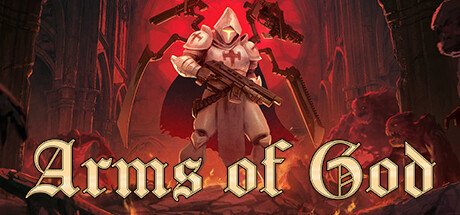
The Arms of God Demo provides a substantial taste of the full game, covering the first chapter (Temple Ruins) and the first boss encounter. It gives access to two weapon types (Divine Sword and Holy Staff) and lets you experience the core combat loop including combos, Divine Form, and skill upgrades. Demo progress carries over to the full game if purchased. The demo is an excellent way to evaluate whether the combat system's depth and the divine weapon mechanic appeal to your playstyle before committing to a purchase.
Starting Arms of God Demo can feel overwhelming. This guide tells you exactly what to focus on during your first hours so you don't waste time on things that don't matter yet. For the full progression path, see our walkthrough.
What Kind of Game Is This?
Arms of God Demo is a action game built around hack-and-slash combat and divine weapon system. The core loop involves mastering these systems to progress through increasingly challenging content.
What to expect: Time investment in learning mechanics, experimentation, and gradual mastery. The game rewards patience and knowledge.
Choosing Your First Role
| Role | Beginner Rating | Why |
|---|---|---|
| Warrior | Good (but demanding) | Learn the five-hit light combo and heavy finisher. Practice perfect dodges against temple enemies. Use Divine Form on the boss. |
| Mage | Excellent for beginners | Mix staff melee combos with spell casts. Place spell circles on choke points. Experience the different rhythm compared to the sword. |
| Rogue | Not recommended first | Not available. Daggers unlock in the Dark Forest zone (full game only). |
| Paladin | Not recommended first | Not available. Shield unlocks in the Volcanic Forge (full game only). |
| Ranger | Not recommended first | Not available. Bow unlocks in the Celestial Tower (full game only). |
Our recommendation: Start with Mage. The Holy Staff is obtained partway through the demo, offering a taste of the ranged-melee hybrid playstyle. Spell circles are powerful for controlling groups of temple enemies.
Avoid Ranger as your first pick. The Celestial Bow is not available in the demo. Once you're ready, check our classes guide for all options.
First Session Step-by-Step
Step 1: Learn hack-and-slash combat
The demo features the full combat system: light attacks, heavy attacks, launchers, dodge rolls, and aerial juggling. Combo ratings from D to SSS affect XP gain. Perfect dodges trigger slow-motion counter windows. All core combat mechanics are present and identical to the full game.
This is the foundation. Spend your first 15-30 minutes getting comfortable with how hack-and-slash combat works before worrying about anything else. Our combat guide breaks this down further.
Step 2: Head to Temple Ruins
The only zone available in the demo. Features tutorial encounters, environmental exploration, and the Temple Guardian boss. Thoroughly explore for hidden relics and Divine Point pickups.
Clear the main content here before moving on. Everything teaches fundamentals you'll need later. See our maps guide for all locations.
Step 3: Get Your First Upgrade
Look for Holy Staff: it's the most accessible early upgrade. Found partway through the Temple Ruins after clearing the first mini-boss. Introduces the melee-magic hybrid playstyle. Experiment with alternating staff strikes and spell casts to understand the weapon switching system.
Step 4: Understand divine weapon system
Two weapons are available in the demo: Divine Sword and Holy Staff. Each has its first skill tree tier unlockable, showing how the branching upgrade system works. Divine Form activates after building charge through combat, transforming your weapon temporarily.
This is the system most new players overlook. Invest time here early. It pays off throughout the entire game.
Step 5: Push to Dark Forest
Not available in the demo. This is the second zone in the full game, accessible after defeating the Temple Guardian.
Essential Mechanics Explained
hack-and-slash combat
The demo features the full combat system: light attacks, heavy attacks, launchers, dodge rolls, and aerial juggling. Combo ratings from D to SSS affect XP gain. Perfect dodges trigger slow-motion counter windows. All core combat mechanics are present and identical to the full game.
divine weapon system
Two weapons are available in the demo: Divine Sword and Holy Staff. Each has its first skill tree tier unlockable, showing how the branching upgrade system works. Divine Form activates after building charge through combat, transforming your weapon temporarily.
boss encounters
The demo concludes with the Temple Guardian boss. A multi-phase fight teaching phase transitions, telegraph recognition, and Divine Form timing. This boss serves as a skill check for the combat system before the full game's difficulty ramp.
skill upgrades
The demo allows spending Divine Points on the first tier of skill upgrades for both available weapons. This demonstrates the upgrade system without the full branching complexity of the complete skill trees.
demo content
Content is limited to the Temple Ruins zone with approximately 2-3 hours of gameplay including exploration, combat encounters, and the boss fight. All tutorials are present. Save data transfers to the full game.
Common Beginner Mistakes
1. Rushing to the boss without learning the combat system
The Temple Guardian will punish button-mashing. Spend time learning combos on regular enemies first.
2. Ignoring the Divine Sword to only use the Holy Staff (or vice versa)
The demo is meant to showcase both weapons. Try both to make an informed purchase decision.
3. Not visiting the Demo Arena
The training dummies provide a zero-pressure environment to learn combo timing and experiment with skill upgrades.
4. Assuming the demo represents the full game's difficulty
The Temple Ruins is the easiest zone. The full game ramps up significantly after Chapter 1.
5. Not exploring for hidden relics
The demo's 3 secret relics carry over to the full game and give a meaningful early-game advantage.
First 5 Hours Checklist
- Understand hack-and-slash combat and divine weapon system
- Choose Mage as starting role
- Clear Temple Ruins main content
- Acquire Holy Staff or equivalent upgrade
- Reach Dark Forest
- The demo is designed to be replayed. Try beating the boss with both the Divine Sword and Holy Staff to compare weapon feel before buying the full game.
- The training dummies in the Demo Arena show DPS numbers. Practice combo strings here until you can consistently maintain B-rank or higher combos.
Tips for New Players
- The demo is designed to be replayed. Try beating the boss with both the Divine Sword and Holy Staff to compare weapon feel before buying the full game.
- The training dummies in the Demo Arena show DPS numbers. Practice combo strings here until you can consistently maintain B-rank or higher combos.
- The Temple Guardian boss has 3 phases. Phase 1 teaches basic dodge timing, Phase 2 introduces combo opportunities, Phase 3 tests Divine Form usage.
- Demo save data transfers fully to the full game. Any levels gained, relics found, and skills unlocked carry over. Don't worry about wasted progress.
- Explore the Temple Ruins thoroughly for hidden relics behind destructible walls. The demo contains 3 secret relics that significantly boost combat stats.
- Perfect dodge timing is approximately 200ms before impact. Practice against the temple guardians' slow overhead attacks. They're the most forgiving to learn on.
- The Holy Staff's spell circles persist for 5 seconds. Place them on doorways and kite enemies through for free damage without engaging in melee.
- Try maintaining a full combo without getting hit to see SSS rank. The XP and damage multiplier at SSS is massive and previews the full game's reward loop.
Frequently Asked Questions
Does Arms of God demo progress carry to the full game?
Yes, all progress transfers. Levels, relics, skills, and weapon upgrades earned in the demo apply when you start the full game. You continue from where the demo ends.
How long is the Arms of God demo?
Approximately 2-3 hours for a thorough playthrough including exploration and the boss fight. Speed players can clear it in about 1 hour.
What weapons are available in the Arms of God demo?
Only the Divine Sword (available from start) and Holy Staff (found in Temple Ruins). The other three weapons (Shadow Daggers, Sacred Shield, and Celestial Bow) require the full game.
More Arms of God Demo Guides
- Arms of God Demo Arms of God Demo Overview
- Arms of God Demo Best Builds
- Arms of God Demo Tier List
- Arms of God Demo Walkthrough
- Arms of God Demo Tips & Tricks
- Arms of God Demo Weapons Guide
- Arms of God Demo Combat Guide
- Arms of God Demo Boss Guide
- Arms of God Demo Maps & Locations
- Arms of God Demo Crafting Guide
- Arms of God Demo Classes & Characters
Similar Games
If you enjoy Arms of God Demo, check out these related guides:
- Helldivers 2 Beginner's Guide: action game with similar mechanics
- Black Myth: Wukong Beginner's Guide: action game with similar mechanics
- Monster Hunter Wilds Beginner's Guide: action game with similar mechanics