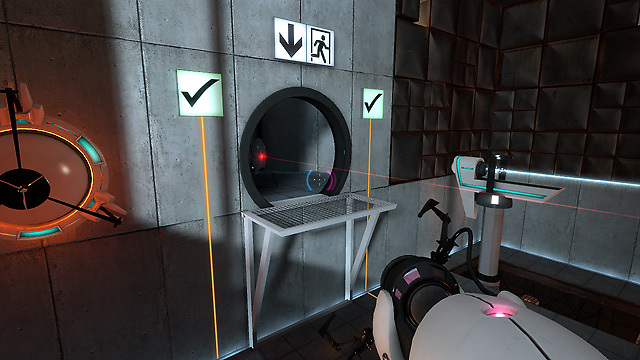
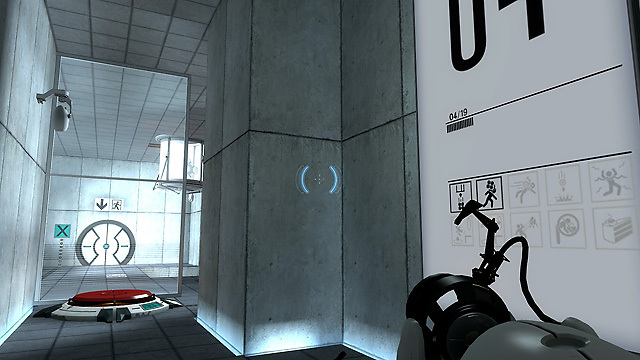
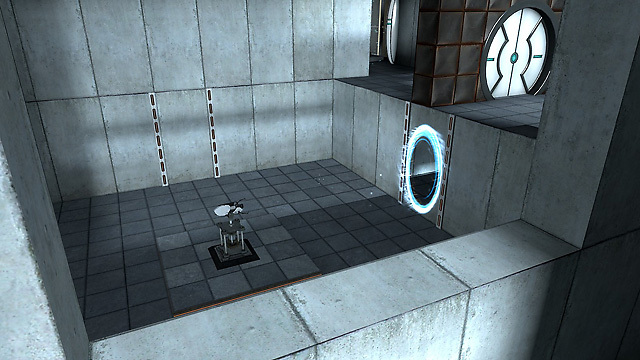
Portal is Valve's genre-defining puzzle game where you solve test chambers using a gun that creates linked portals on surfaces. What starts as a clever physics puzzle game evolves into one of gaming's most memorable narrative experiences as the AI GLaDOS's cheerful testing instructions become increasingly sinister. The portal mechanic ('speedy thing goes in, speedy thing comes out') exploits momentum conservation for increasingly complex spatial puzzles. Completable in 2-4 hours, Portal is a perfect example of game design economy: every mechanic is introduced, explored, and subverted in a tight package. The game remains essential playing for anyone interested in game design, puzzle design, or just excellent video games.
Starting Portal can feel overwhelming. This guide tells you exactly what to focus on during your first hours so you don't waste time on things that don't matter yet. For the full progression path, see our walkthrough.
What Kind of Game Is This?
Portal is a puzzle game built around portal gun mechanics and momentum conservation.
What to expect: Time investment in learning mechanics, experimentation, and gradual mastery.
Choosing Your First Build
| Build | Beginner Rating | Why |
|---|---|---|
| Speedrunner | Excellent for beginners | Skip puzzles entirely through movement exploits, precise portal placement at exact locations, and trigger manipulation. |
| Puzzle Solver | Good (but demanding) | Examine each chamber systematically, identify portal-able surfaces, test momentum trajectories, solve through logic. |
| Explorer | Good (but demanding) | Look behind every wall panel, search for hidden rooms, find Ratman dens, discover environmental storytelling details. |
| Challenge Mode | Excellent for beginners | Minimize portal count or time by finding the most efficient solution path for each chamber. |
| Commentary Mode | Situational | Play through normally while activating commentary nodes to hear Valve developers discuss the design process. |
Our recommendation: Start with Puzzle Solver. The intended experience. Solving each test chamber through logical deduction. Examining surfaces for portal placement, understanding momentum trajectories, and experimenting with physics. The most satisfying approach for first-time players.
Avoid Commentary Mode as your first pick. Replaying with developer commentary enabled.
First Session Step-by-Step
Step 1: Learn portal gun mechanics
The portal gun creates two linked portals (blue and orange) on flat white surfaces. Objects and the player pass through one portal and emerge from the other, maintaining speed and direction. Only one of each color can exist at a time. Placing a new blue portal removes the old one. Understanding which surfaces accept portals is the first puzzle in each room.
This is the foundation. Spend your first 15-30 minutes getting comfortable with how portal gun mechanics works before worrying about anything else.
Step 2: Head to Test Chamber 01-10
Introduction chambers teaching portal basics. Single portal use, momentum, button interaction. Difficulty is low, focusing on mechanic understanding. GLaDOS's commentary is encouraging and friendly in these early chambers.
Step 3: Get Your First Upgrade
Look for Companion Cube: it's the most accessible early upgrade. A weighted storage cube with hearts that appears in Chamber 17. Functions identically to regular weighted cubes. Presses buttons and blocks turret sightlines. Its emotional significance comes from GLaDOS's narration rather than any gameplay difference.
Step 4: Understand momentum conservation
Portals conserve momentum. 'speedy thing goes in, speedy thing comes out.' Falling from a great height into a floor portal launches you horizontally from a wall portal with the same speed. This 'fling' technique is the game's core advanced mechanic, enabling traversal of large gaps and reaching seemingly impossible heights.
Invest time here early.
Step 5: Push to Test Chamber 11-15
Intermediate chambers introducing turrets, energy balls, and multi-step puzzle sequences. Complexity increases with combined mechanics. GLaDOS begins showing hints of her true nature through passive-aggressive comments.
Essential Mechanics Explained
portal gun mechanics
The portal gun creates two linked portals (blue and orange) on flat white surfaces. Objects and the player pass through one portal and emerge from the other, maintaining speed and direction. Only one of each color can exist at a time. Placing a new blue portal removes the old one. Understanding which surfaces accept portals is the first puzzle in each room.
momentum conservation
Portals conserve momentum. 'speedy thing goes in, speedy thing comes out.' Falling from a great height into a floor portal launches you horizontally from a wall portal with the same speed. This 'fling' technique is the game's core advanced mechanic, enabling traversal of large gaps and reaching seemingly impossible heights.
companion cube
A weighted storage cube with hearts on its sides, used for pressing buttons and blocking turret sightlines. The Companion Cube appears in one specific chamber and must be 'euthanized' (incinerated) to proceed. A moment that tests players' emotional attachment to a box. It's a brilliant piece of game design.
turret avoidance
Aperture Science turrets fire bullets in a straight line and can be knocked over by physics objects or portal placement. They chirp friendly warnings before firing. Defeating turrets by launching objects at them, redirecting their fire through portals, or simply tipping them over is deeply satisfying.
physics puzzles
Puzzles use real physics. Weight, momentum, trajectory, gravity. Energy balls bounce off walls and must be redirected through portals to power receptacles. Water and goo physics in later sections add additional mechanics. Every puzzle has a logical solution derived from the physics rules.
Common Beginner Mistakes
1. Looking up puzzle solutions instead of working through them
Portal's puzzles are designed to be solvable through logical deduction. The satisfaction of solving them is the game's primary reward.
2. Not understanding momentum conservation (the fling)
Many players place portals without considering their entry speed. Remember: the speed you enter one portal equals the speed you exit the other.
3. Ignoring non-obvious portalable surfaces
Solutions often require placing portals on floors, ceilings, or walls you haven't considered. Scan the entire room for white surfaces.
4. Rushing through without exploring for Ratman dens
The environmental storytelling in hidden rooms adds significant narrative depth to an already excellent story.
5. Not replaying with developer commentary
Portal with commentary is essentially a free game design masterclass from Valve's best designers.
First 5 Hours Checklist
- Understand portal gun mechanics and momentum conservation
- Choose Puzzle Solver as starting build
- Clear Test Chamber 01-10 main content
- Acquire Companion Cube or equivalent upgrade
- Reach Test Chamber 11-15
- Portals conserve momentum. If you fall from 20 meters into a floor portal, you exit the wall portal with the same speed. This 'fling' technique is essential for crossing gaps in later chambers.
- Only white and light-colored flat surfaces accept portals. If a surface doesn't work, look for portalable walls or floors nearby. The solution always involves available surfaces.
Tips for New Players
- Portals conserve momentum. If you fall from 20 meters into a floor portal, you exit the wall portal with the same speed. This 'fling' technique is essential for crossing gaps in later chambers.
- Only white and light-colored flat surfaces accept portals. If a surface doesn't work, look for portalable walls or floors nearby. The solution always involves available surfaces.
- The Companion Cube blocks turret sightlines completely. In Chamber 17, use it as a mobile shield to cross turret-covered areas safely.
- Energy balls travel in straight lines and bounce at equal angles. Place portals to redirect them into receptacles. Visualize the bounce angle before placing your portal.
- Look for Ratman dens behind loose wall panels, especially in the behind-the-scenes section. These hidden rooms contain cryptic drawings that reveal the backstory of a previous test subject.
- Turrets can be knocked over by launching objects through portals at them. A cube launched at high speed from a fling portal one-shots any turret arrangement.
- After completing the story, enable developer commentary for a second playthrough. Each commentary node reveals fascinating design decisions and playtesting insights.
- Challenge Mode's 'least portals' constraints often have radically different solutions than the standard approach. Some chambers can be solved with just 2 portals through creative momentum use.
- The 'cake is a lie' graffiti in Ratman dens foreshadows GLaDOS's deception. Looking for these environmental clues adds narrative depth to the puzzle-solving experience.
- Portal is best experienced blind on first playthrough. Resist the urge to look up solutions. The satisfaction of solving each chamber yourself is the entire point.
Frequently Asked Questions
How long is Portal?
2-4 hours for a first playthrough. Experienced players can complete it in 1-2 hours. Speedrunners finish in under 10 minutes. Despite its short length, Portal is considered one of the greatest games ever made due to its perfect pacing.
Should I play Portal before Portal 2?
Yes. Portal 2 directly continues the story and builds on mechanics introduced in Portal. Portal also establishes the relationship with GLaDOS that Portal 2's narrative depends on. Play Portal first.
Is Portal hard?
The difficulty curve is gentle. Early chambers are simple tutorials, and complexity builds gradually. Most players solve every chamber without guides. If you get stuck, re-examine the room for surfaces you haven't tried portaling.
Is there a Portal 3?
No official announcement. Portal 2 (2011) concluded the story satisfactorily. Valve has not confirmed any plans for Portal 3. Fan-made mods and community test chambers provide additional Portal content.
Similar Games
If you enjoy Portal, check out these related guides:
- Escape Simulator Beginner's Guide: puzzle game with similar mechanics
- Pico Park Beginner's Guide: puzzle game with similar mechanics
- Blue Prince Beginner's Guide: puzzle game with similar mechanics