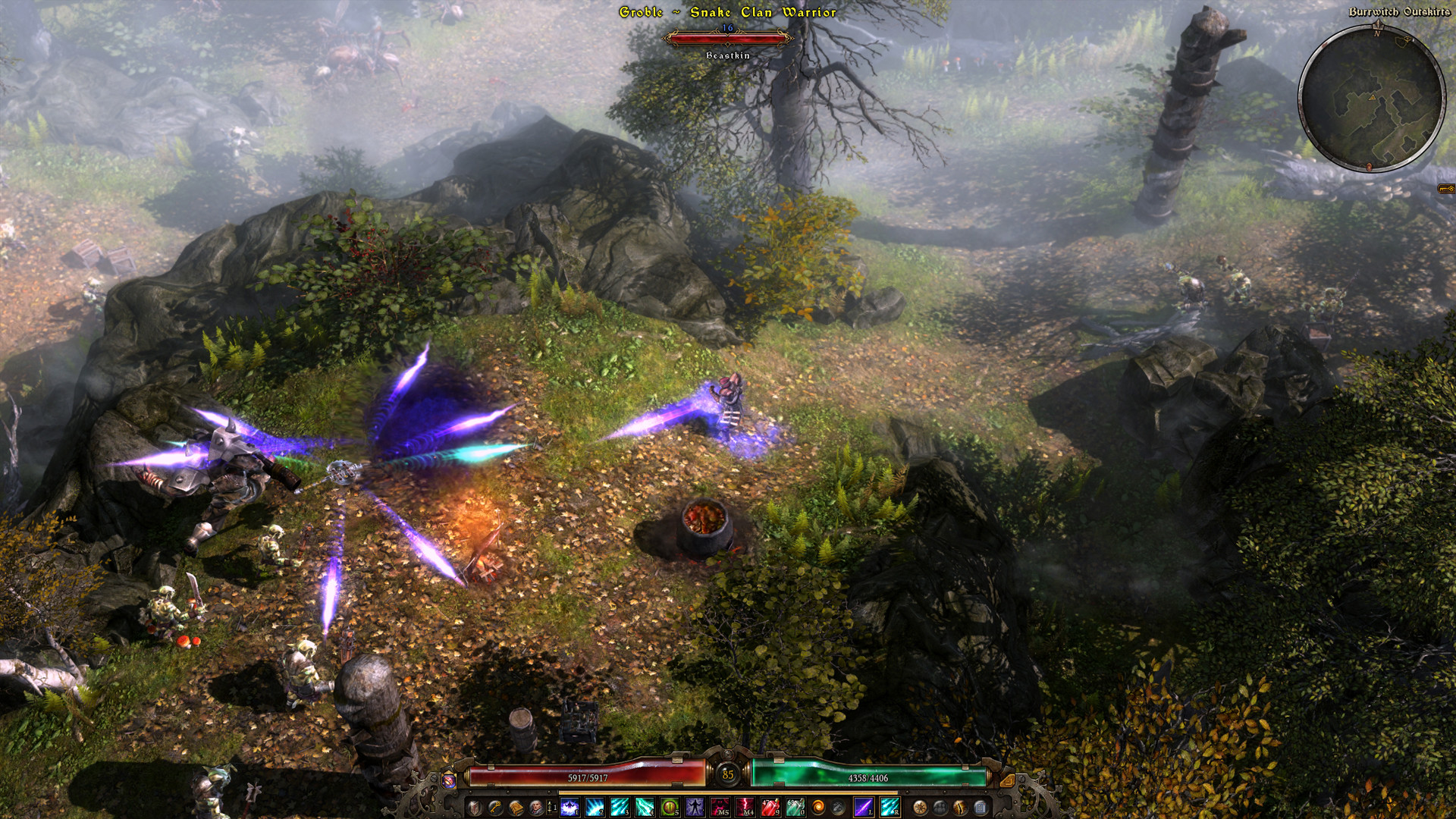
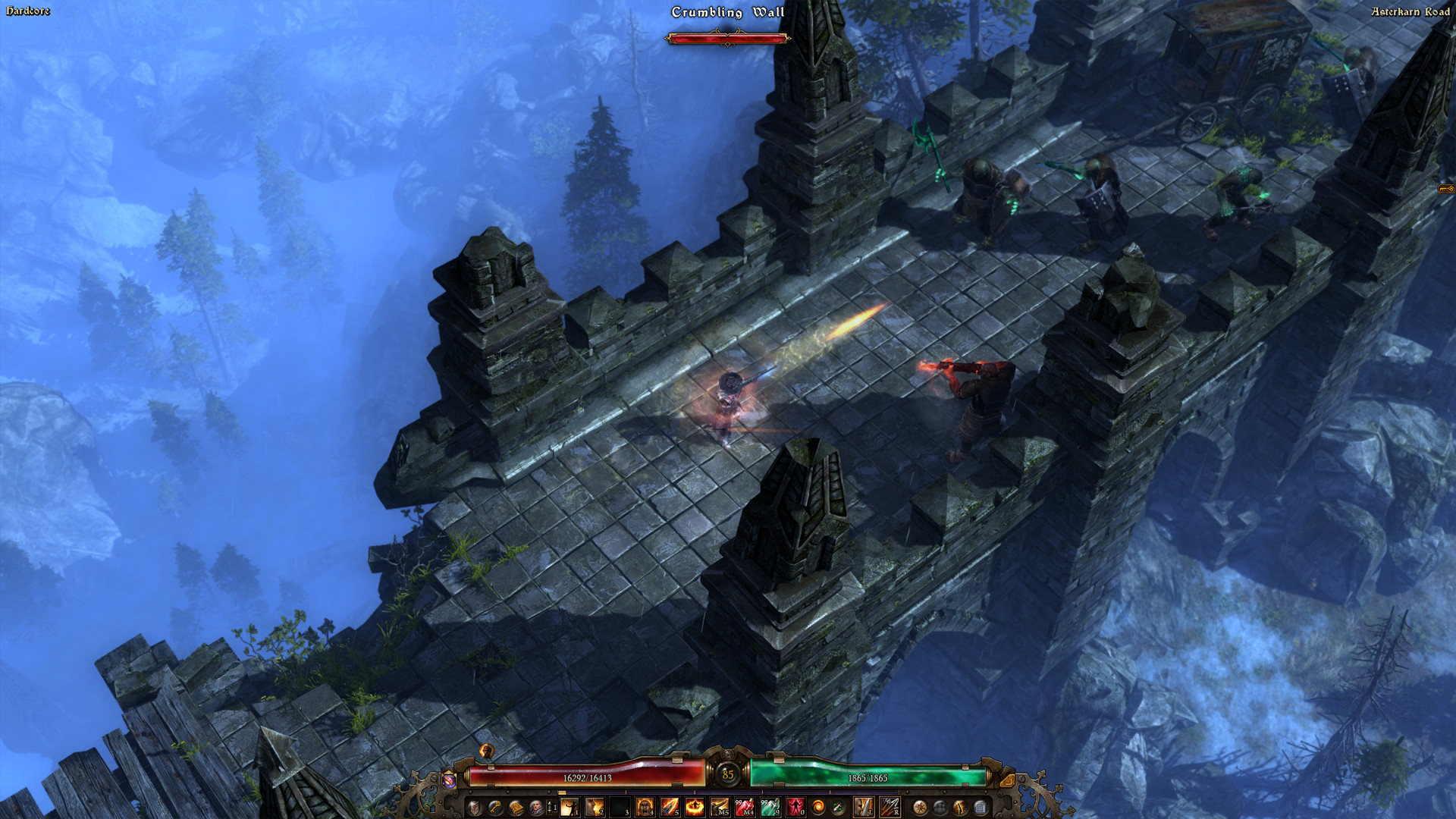
Grim Dawn is Crate Entertainment's action RPG built on the Titan Quest engine, offering one of the deepest character build systems in the ARPG genre through its dual mastery and devotion constellation systems. Set in a dark Victorian-era world ravaged by two warring otherworldly forces, the game combines satisfying click-to-kill combat with build theory that rivals Path of Exile in complexity. The dual mastery system (pick 2 of 9 classes to combine) creates 36 unique class combinations, each with distinct combinations. Two major expansions (Ashes of Malmouth and Forgotten Gods) extend the campaign and add three more masteries, pushing combinations to 66 total. Grim Dawn is the thinking person's ARPG.
If you're just starting, check our beginner's guide first.
Essential Tips
1. Cap all resistances at 80% before entering Elite difficulty
Overcapping by 20-30% accounts for enemy resistance reduction effects. Uncapped resistances in Elite and Ultimate are a death sentence.
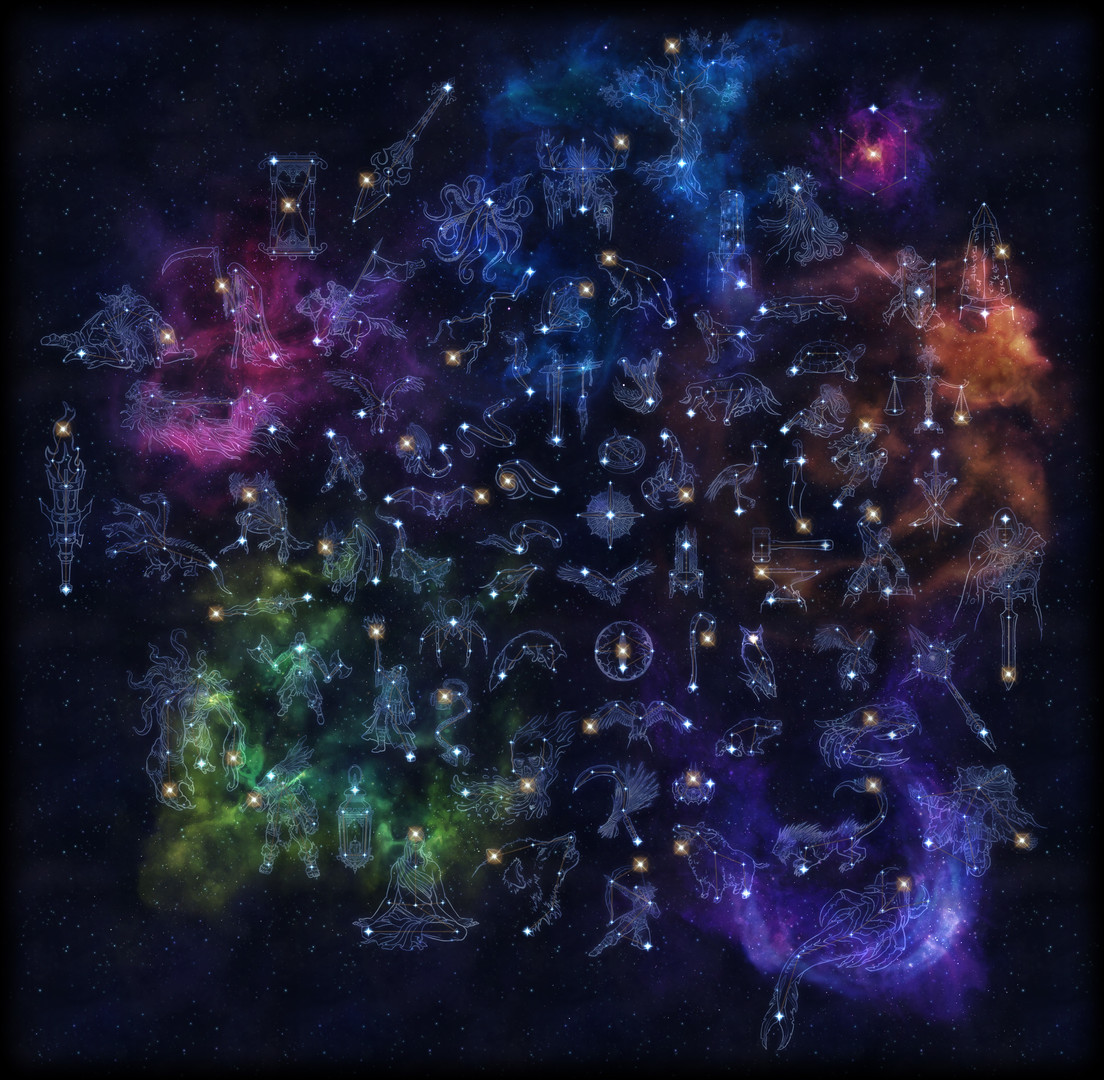
2. Devotion constellation planning matters as much as mastery choices
Use Grimtools (grimtools.com) to plan your entire devotion path before committing points in-game.
3. Monster Infrequent items with double rare affixes (green name with both a rare prefix and suffix) can be best-in-slot
Don't discard green items without checking their affixes.
4. Sell items to faction vendors to gain reputation faster
The sell value doesn't matter. The reputation gain per transaction accelerates faction progression.
5. The Shattered Realm (Forgotten Gods) is the most efficient endgame loot farming method
Reaching Shard 75-76 and farming those two shards repeatedly maximizes legendary drops per hour.
6. Offensive Ability (OA) above 3000 ensures consistent critical hits
Defensive Ability (DA) above 2800 prevents enemies from critting you. These two stats matter as much as damage for endgame builds.
7. Component augments in weapons and armor provide significant stat bonuses
Don't run with empty component slots. Even basic components like Antivenom Salve or Ectoplasm help.
8. The Blacksmith can craft legendary items from blueprints
Farm blueprints from treasure troves and nemesis bosses. Some of the best items in the game are craftable.
9. Plan your second mastery before level 10
Some combinations are significantly stronger than others. Grimtools build calculators help preview the final result.
10. Faction-specific augments for rings, amulets, and medals are endgame power multipliers
Maxing at least two faction reputations in each difficulty unlocks the strongest augments.
Advanced Strategies
Build Optimization
The difference between an average build and an optimized one is massive. See our builds guide for full breakdowns.
-
The most versatile mastery with strong physical damage, excellent defensive passives (Military Conditioning, Menhir's Will), and the Field Command aura. Soldier combines with almost everything: Commando (+ Demolitionist), Warlord (+ Oathkeeper), and Death Knight (+ Necromancer) are all top-tier.
-
Core gear: Krieg Death Knight Set (Death Knight), Warborn Set (Warlord)
-
Stat priority: Physique, Offensive Ability, Defensive Ability, Resistances
-
Fire and lightning specialist with the best AoE through Canister Bomb and Mortar Trap. Thermite Mines reduce enemy fire resistance. The Commando (+ Soldier) and Shieldbreaker (+ Oathkeeper) combinations are excellent for fire-based builds.
-
Core gear: Darkblaze Pyromancer Set (Pyromancer), Ulzuin Set
-
Stat priority: Fire/Lightning Damage, Offensive Ability, Cast Speed
Mechanic Interactions
Understanding how Grim Dawn's systems interact is where the real optimization lives. Our combat guide covers this in detail.
dual mastery system + devotion constellation: At level 2, you pick your first mastery (class). Combined with devotion constellation, a separate progression system where you spend devotion points (earned by restoring shrines) in a star constellation map.
faction reputation + loot filtering: Six friendly factions and several hostile factions track your reputation. When paired with loot filtering, the rainbow filter and in-game loot filter highlight monster infrequent items with desirable affixes.
monster infrequents scaling: Specific enemies drop specific green-named items with guaranteed base stats and random prefix/suffix modifiers. A Cronley's Signet ring with a Thunderstruck prefix and of the Wild suffix can be best-in-slot for certain builds. Farming specific MIs with good affixes is the ultimate min-max activity.
Equipment Efficiency
| Equipment | Best Use Case | Why |
|---|---|---|
| Krieg Death Knight Set | Death Knight (Soldier + Necromancer) | A full legendary set for the Soldier + Necromancer (Death Knight) combination, converting Forcewave to aether damage. |
| Ultos Warder Set | Warder (Soldier + Shaman) | Lightning-focused set for Soldier + Shaman (Warder) that turns Primal Strike into a devastating lightning auto-attack. |
| Darkblaze Pyromancer | Pyromancer (Demolitionist + Occultist) | A chaos/fire set for Demolitionist + Occultist (Pyromancer) that enhances Blackwater Cocktail and Fire Strike. |
| Belgothian Blademaster | Blademaster (Soldier + Nightblade) | Dual-wield focused set for Soldier + Nightblade (Blademaster) that enhances Belgothian Strikes (default attack replacer). |
| Trozan Druid Set | Druid (Shaman + Arcanist) | A cold/lightning caster set for Shaman + Arcanist (Druid) that enhances Trozan's Sky Shard into a nuclear AoE spell. |
Location Efficiency
Devil's Crossing (Level 1-20): The first hub town and quest hub. Merchants sell faction-specific augments at max reputation. The bounty table provides repeatable quests for XP and reputation. The prison area below Devil's Crossing is the first dungeon.
Homestead (Level 20-40): The second hub town in Act 2 with expanded merchants and higher-level bounties. The surrounding farmlands are excellent for Monster Infrequent farming. Several faction NPCs provide reputation quests.
Fort Ikon (Level 40-60): The military fortress hub in Act 3 with the most faction vendors. The approach to Fort Ikon through the Blood Grove contains dangerous Nemesis spawn areas. The Bastion of Chaos roguelike dungeon is accessible nearby.
Malmouth (Level 60-85): The Ashes of Malmouth expansion's hub city, a ruined metropolis overrun by the Aetherials. The Crown Hill area contains the Krieg bosses who drop the Death Knight set. The most challenging base game campaign content.
Forgotten Gods (Level 75-100): The second expansion's desert region accessed through a portal. The Shattered Realm endless dungeon provides the best endgame loot farming. Three cults offer unique devotion-altering augments.
Mistakes Even Veterans Make
- Investing too many points in the mastery bar without putting points into skills. The mastery bar provides stats, but skills provide actual combat ability. Balance both.
- Ignoring resistance capping. Players who face-tank on Normal then enter Elite with 30% resistances wonder why they die instantly. Cap before advancing difficulty.
- Picking two masteries without checking if they have complementary damage types. A build splitting between fire and cold damage invests in two types without maximizing either.
- Not using components and augments in equipment. Empty slots mean missing thousands of points of stats that accumulate across all gear pieces.
- Farming level 50 content for endgame items. Legendary drop rates in the game only become reasonable at level 94+ content. Rush to max level before serious farming.
Pro Quick Tips
- Cap all resistances at 80% before entering Elite difficulty. Overcapping by 20-30% accounts for enemy resistance reduction effects. Uncapped resistances in Elite and Ultimate are a death sentence.
- Devotion constellation planning matters as much as mastery choices. Use Grimtools (grimtools.com) to plan your entire devotion path before committing points in-game.
- Monster Infrequent items with double rare affixes (green name with both a rare prefix and suffix) can be best-in-slot. Don't discard green items without checking their affixes.
- Start with Demolitionist, switch to Soldier when ready
- Invest in Krieg Death Knight Set above everything else
- Clear areas in order: Devil's Crossing → Homestead → Fort Ikon → Malmouth → Forgotten Gods. See our maps guide
- dual mastery system + devotion constellation together are stronger than either alone
Similar Games
If you enjoy Grim Dawn, check out these related guides:
- Elden Ring Tips & Tricks: rpg game with similar mechanics
- Baldur's Gate 3 Tips & Tricks: rpg game with similar mechanics
- Cyberpunk 2077 Tips & Tricks: rpg game with similar mechanics