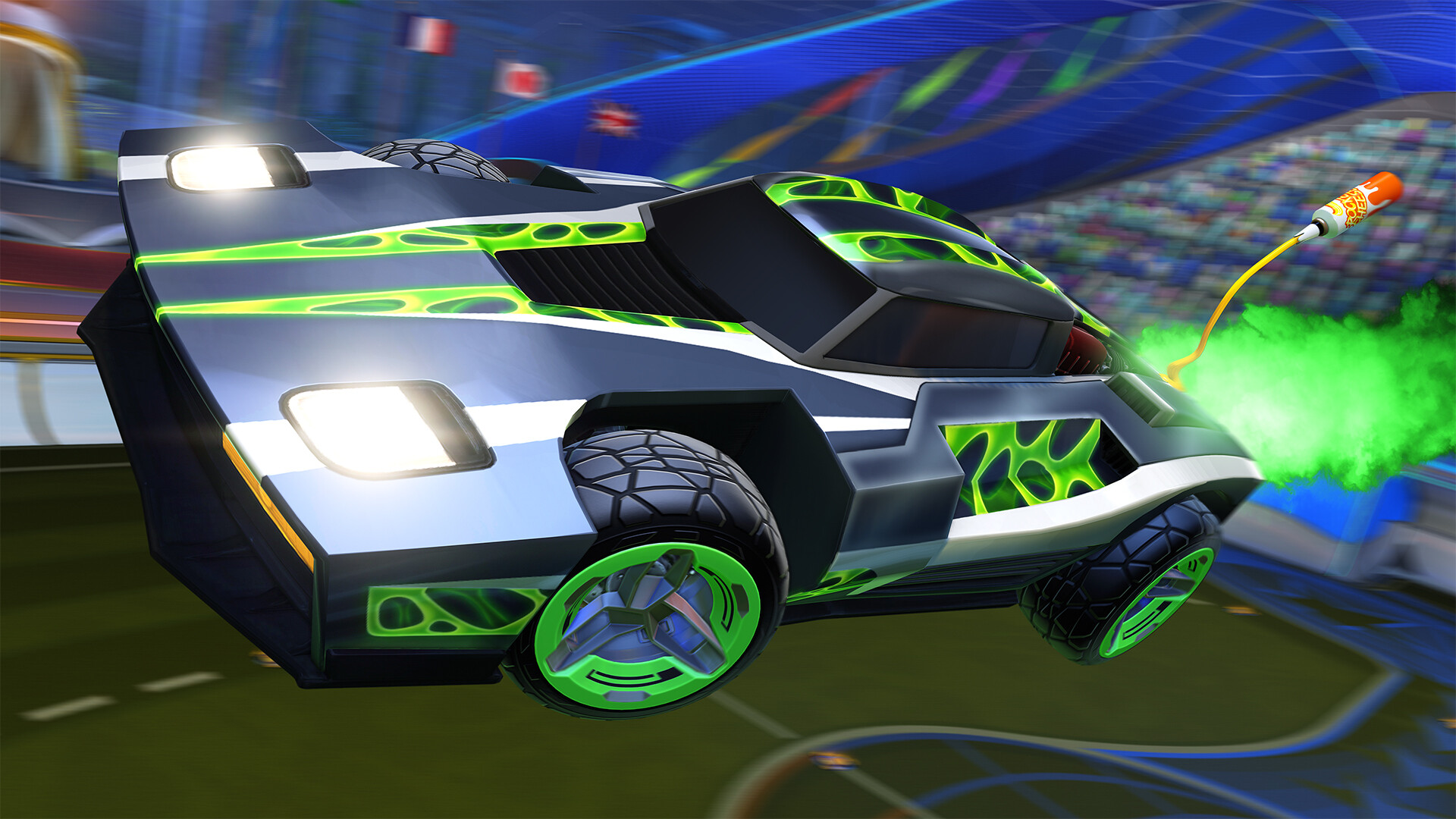

Rocket League is the rocket-powered car soccer game that created its own esport through pure mechanical depth. The premise (drive cars to hit a giant ball into a goal) is instantly understandable, but the skill ceiling is virtually limitless. Air dribbles, flip resets, ceiling shots, and double taps separate each rank tier. The game rewards thousands of hours of practice with visible mechanical improvement that never plateaus. With the transition to free-to-play and the established RLCS esport scene, Rocket League's competitive community is one of gaming's most passionate. Every goal feels earned, every save feels clutch, and every overtime is heart-pounding.
Starting Rocket League can feel overwhelming. This guide tells you exactly what to focus on during your first hours so you don't waste time on things that don't matter yet. For the full progression path, see our walkthrough.
What Kind of Game Is This?
Rocket League is a sports game built around aerial mechanics and boost management.
What to expect: Time investment in learning mechanics, experimentation, and gradual mastery.
Choosing Your First Role
| Role | Beginner Rating | Why |
|---|---|---|
| Octane | Good (but demanding) | Well-rounded for all mechanics: ground play, aerials, dribbling, and 50/50s. The default recommendation for every rank. |
| Fennec | Good (but demanding) | Identical to Octane in every mechanical way. Choose based on visual preference. Some players aim better with the boxy visual model. |
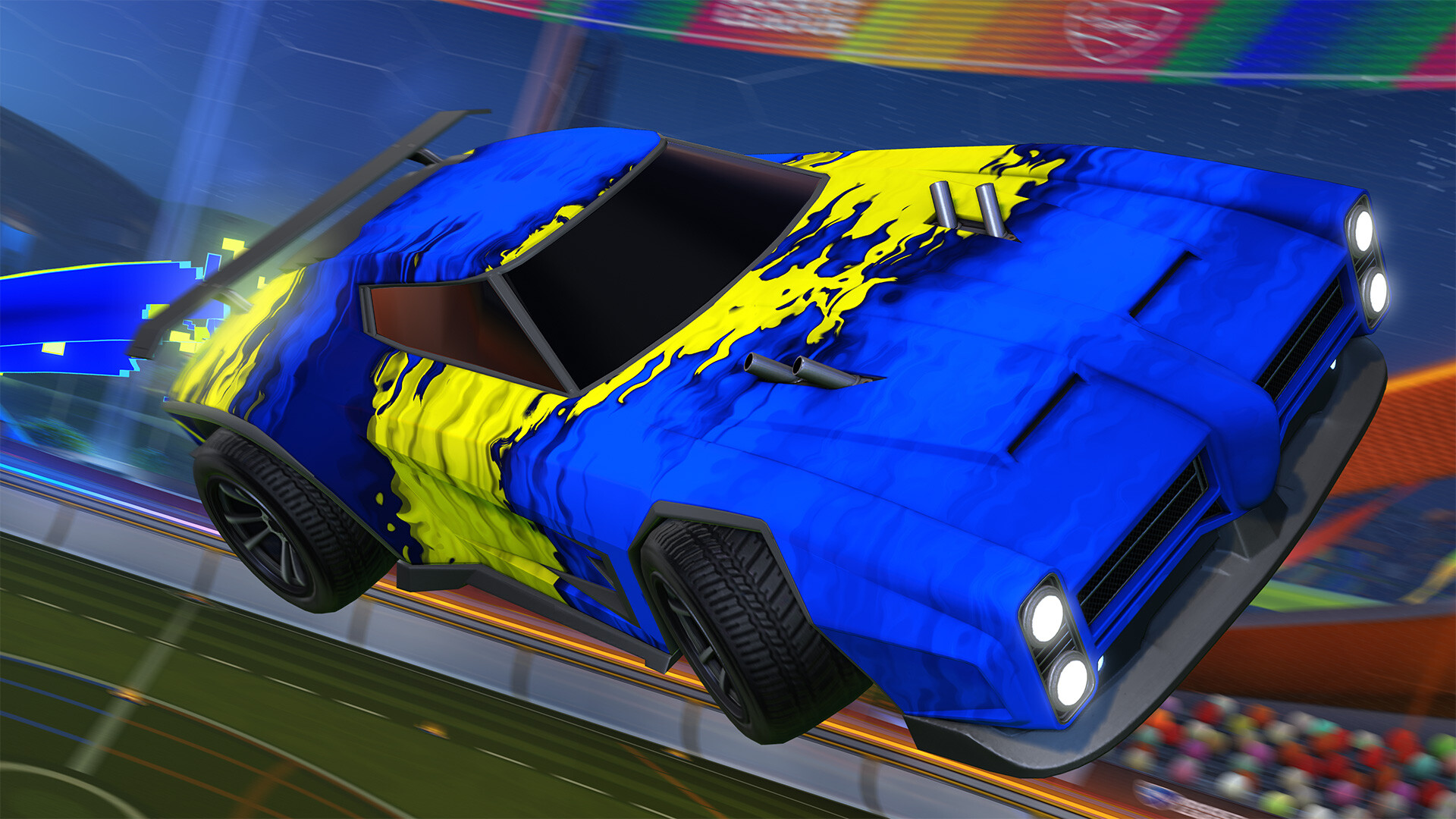
| Dominus | Excellent for beginners | Dribble the ball on the flat roof for flick shots, use the wide hitbox for powerful clears and redirects. |
| Breakout | Situational | Focus on powerful clears and long-range shots. Less effective for finesse play like dribbling and redirects. |
| Batmobile | Situational | Dominate ground play with the flat hitbox, execute devastating flicks, accept weaker aerial play as a tradeoff. |
Our recommendation: Start with Fennec. Uses the same Octane hitbox but with a visual model that matches the hitbox shape more closely. Many players feel the Fennec gives better visual feedback for where the hitbox actually is. Identical performance to Octane.
Avoid Batmobile as your first pick. Uses the Plank hitbox. Once you're ready, check our classes guide for all options.
First Session Step-by-Step
Step 1: Learn aerial mechanics
Flying in Rocket League requires boosting off the ground, tilting your car, and maintaining air control to hit the ball mid-air. Basic aerials (jumping and boosting to meet the ball) are learned around Gold rank. Advanced aerials (fast aerials, directional air roll) define Platinum and Diamond play. Air dribbles and ceiling shots are Champion-level mechanics.
This is the foundation. Spend your first 15-30 minutes getting comfortable with how aerial mechanics works before worrying about anything else.
Step 2: Head to DFH Stadium
The standard competitive map with balanced dimensions. All ranked games use standard-sized maps, so DFH Stadium is representative of the competitive experience. Clean visual design with good ball visibility.
See our maps guide for all locations.
Step 3: Get Your First Upgrade
Look for Air Dribble: it's the most accessible early upgrade. Carry the ball on your car through the air by making soft, controlled touches. Drive up the wall, pop the ball off, match its trajectory, and gently guide it toward goal. Air dribbles are most effective when initiated from the wall.
Step 4: Understand boost management
100 boost lets you fly and accelerate. Full boost pads (4 corner locations, 2 midfield) give 100 boost. Small pads give 12 boost each. Managing boost. Knowing when to grab full pads vs. collecting smalls. Determines your speed and aerial capability. Running out of boost at a critical moment loses goals.
Invest time here early.
Step 5: Push to Mannfield
Another standard-sized competitive map with a nighttime variant. Popular in the competitive scene for its clean aesthetics. Mechanically identical to DFH Stadium. Map selection in ranked is cosmetic.
Essential Mechanics Explained
aerial mechanics
Flying in Rocket League requires boosting off the ground, tilting your car, and maintaining air control to hit the ball mid-air. Basic aerials (jumping and boosting to meet the ball) are learned around Gold rank. Advanced aerials (fast aerials, directional air roll) define Platinum and Diamond play. Air dribbles and ceiling shots are Champion-level mechanics.
boost management
100 boost lets you fly and accelerate. Full boost pads (4 corner locations, 2 midfield) give 100 boost. Small pads give 12 boost each. Managing boost. Knowing when to grab full pads vs. collecting smalls. Determines your speed and aerial capability. Running out of boost at a critical moment loses goals.
rotation strategy
Proper rotation means always having one player in position to defend while teammates attack. The basic rotation: after your turn attacking/challenging the ball, rotate to the far post of your goal. The player at far post has the best angle to save or clear. Solo queuers who rotate properly climb ranks fast.
flip resets
An advanced mechanic where you land all four wheels on the ball mid-air, granting a fresh dodge (flip). The flip reset gives you an additional touch that defenders can't predict. Mastering flip resets takes hundreds of hours but makes you significantly more dangerous in the air.
car hitboxes
Cars have standardized hitbox types: Octane (balanced), Dominus (flat), Breakout (long), Plank, Hybrid, and Merc. Octane hitbox is the most popular due to its balanced height and width for all shot types. Dominus excels at power shots and flicks. Hitbox choice is preference, not power level.
Common Beginner Mistakes
1. Ball chasing
Following the ball everywhere instead of rotating. This leaves your goal empty and doubles up on the ball with teammates. Rotate after every challenge.
2. Going for full boost pads when small pads are sufficient
Driving to a corner for 100 boost takes you out of position for 3-4 seconds. 36 boost (3 small pads) is enough for most plays.
3. Focusing on advanced mechanics (flip resets, ceiling shots) before mastering fundamentals (positioning, recovery, basic aerials)
Fundamentals win more games than flashy mechanics at every rank below Grand Champion.
4. Sitting in goal instead of rotating to far post
A player parked in goal has the worst angle for saves. Far post positioning covers more of the net and allows clearing toward the corner.
5. Tilting and playing ranked while frustrated
Rocket League performance is heavily affected by mental state. Take breaks after 2-3 losses to reset your mental game.
First 5 Hours Checklist
- Understand aerial mechanics and boost management
- Choose Fennec as starting role
- Clear DFH Stadium main content
- Acquire Air Dribble or equivalent upgrade
- Reach Mannfield
- Far post rotation is the single most impactful tactical improvement. After making a play, rotate to the far post of your goal. This gives the best angle for saves and clears.
- Half-flip (backflip canceled into a diagonal flip) is essential for quickly reversing direction. Practice until it's muscle memory. It's used in every game at Diamond and above.
Tips for New Players
- Far post rotation is the single most impactful tactical improvement. After making a play, rotate to the far post of your goal. This gives the best angle for saves and clears.
- Half-flip (backflip canceled into a diagonal flip) is essential for quickly reversing direction. Practice until it's muscle memory. It's used in every game at Diamond and above.
- Camera settings matter more than car choice. Start with: FOV 110, Distance 270, Height 110, Angle -3, Stiffness 0.45. Adjust from there based on comfort.
- Free play practice is more effective than online matches for mechanical improvement. Spend 15-20 minutes in free play before ranked sessions hitting the ball around at full speed.
- Small boost pads give 12 boost each and respawn every 4 seconds. Driving over pad paths (the arcing lines of small pads) maintains your boost without leaving position for a full pad.
- Ball cam should be on 80-90% of the time. Only toggle off (car cam) when dribbling on your roof, picking up boost, or orienting yourself. Keeping ball cam on prevents losing track of the ball.
- Powerslide (hold drift) lets you maintain momentum while turning sharp. Use powerslide for quick recoveries after landing awkwardly and for sharp turns during rotations.
- Watch your own replays after losses. Most goals conceded result from positioning errors, not mechanical failures. Identify where you were when the goal happened and where you should have been.
- In 2v2, the non-ball player's positioning is more important than the ball player's touches. Good second-man positioning (being ready for passes, clears, and opponent counterattacks) wins games.
- Don't chase the ball. If your teammate is closer, let them hit it. Cutting rotation (taking the ball from a teammate) puts two players out of position and leaves the net empty.
Frequently Asked Questions
Is Rocket League free to play?
Yes, Rocket League went free-to-play in September 2020 on all platforms. All gameplay content is free. Purchases are cosmetic only (car bodies, decals, wheels, goal explosions).
What rank is average in Rocket League?
Gold III to Platinum I is the median rank for the player base. Diamond is top 15%, Champion is top 5%, Grand Champion is top 0.5%, and Supersonic Legend is the top fraction of a percent.
How long does it take to get good at Rocket League?
Reaching Platinum (competent play) takes roughly 200-400 hours. Diamond (strong play) takes 500-1000 hours. Champion and above requires 1000+ hours. Rocket League's skill ceiling is essentially infinite.
Does car choice matter in Rocket League?
Car hitboxes matter slightly. Octane vs. Dominus is the biggest difference. Within the same hitbox type, all cars perform identically. At most ranks, the difference is negligible compared to skill. Use whichever car you're most comfortable with.
Similar Games
If you enjoy Rocket League, check out these related guides:
- Football Manager 2024 Beginner's Guide: sports game with similar mechanics
- EA SPORTS FC 25 Beginner's Guide: sports game with similar mechanics