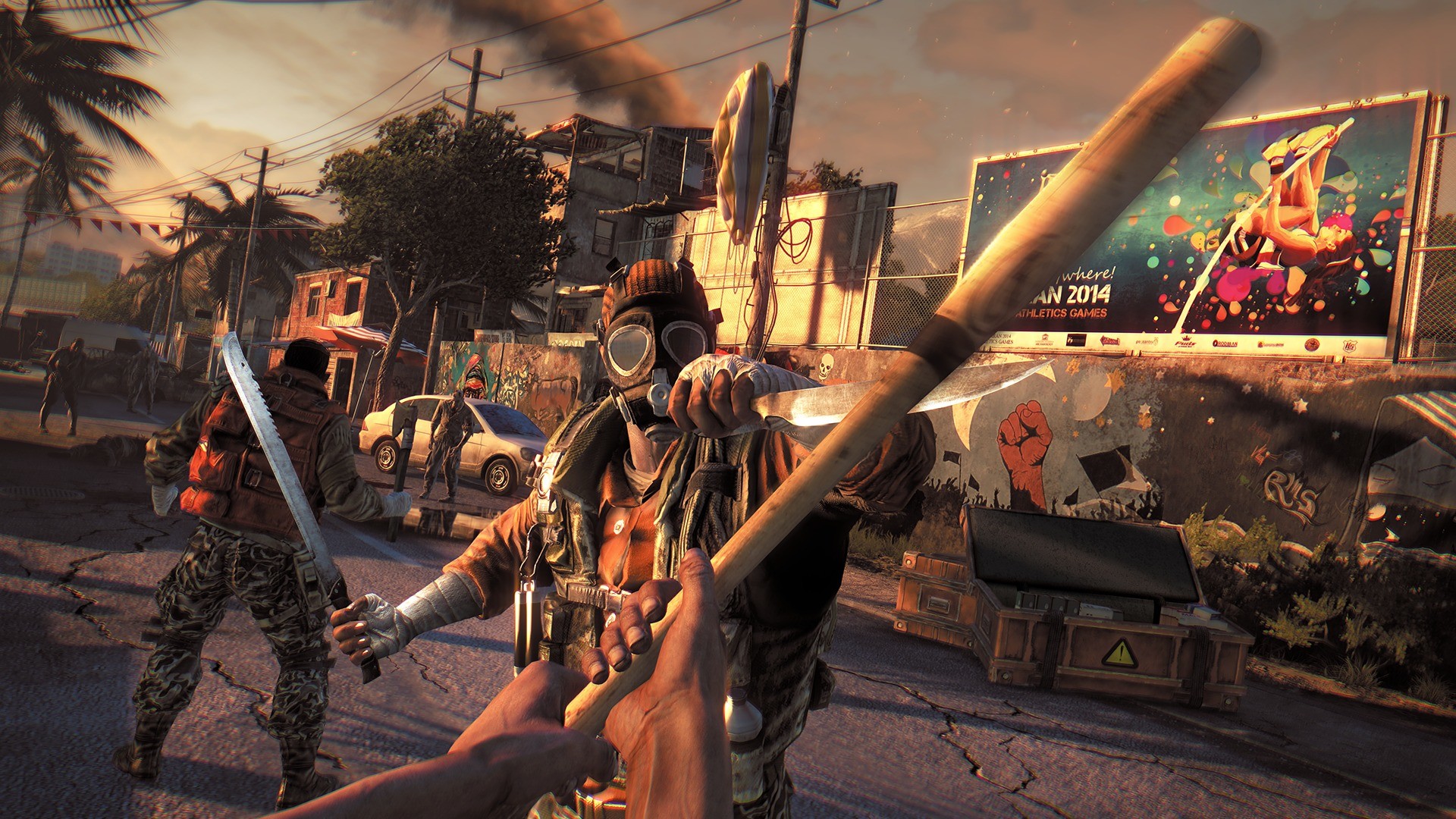
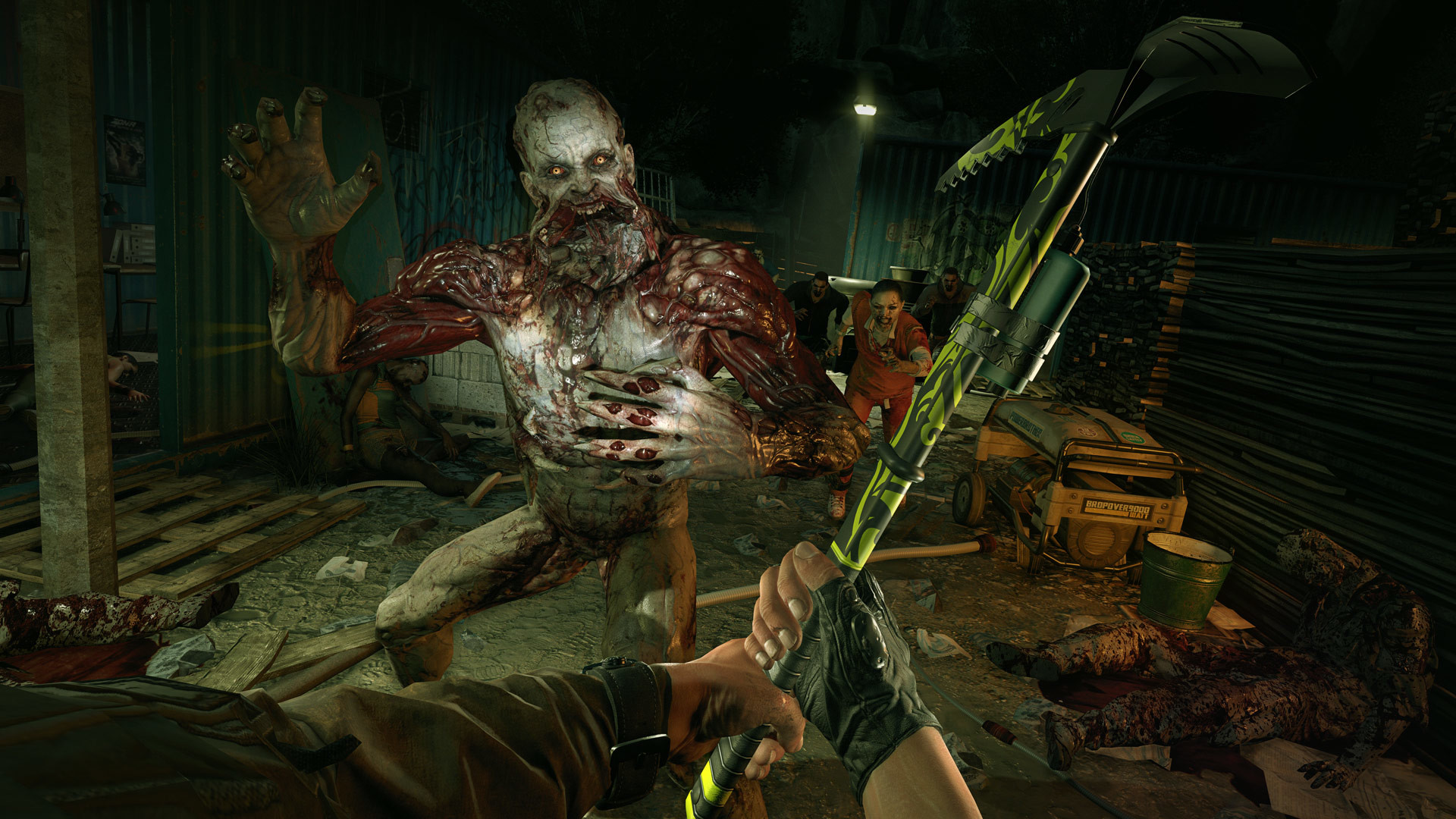
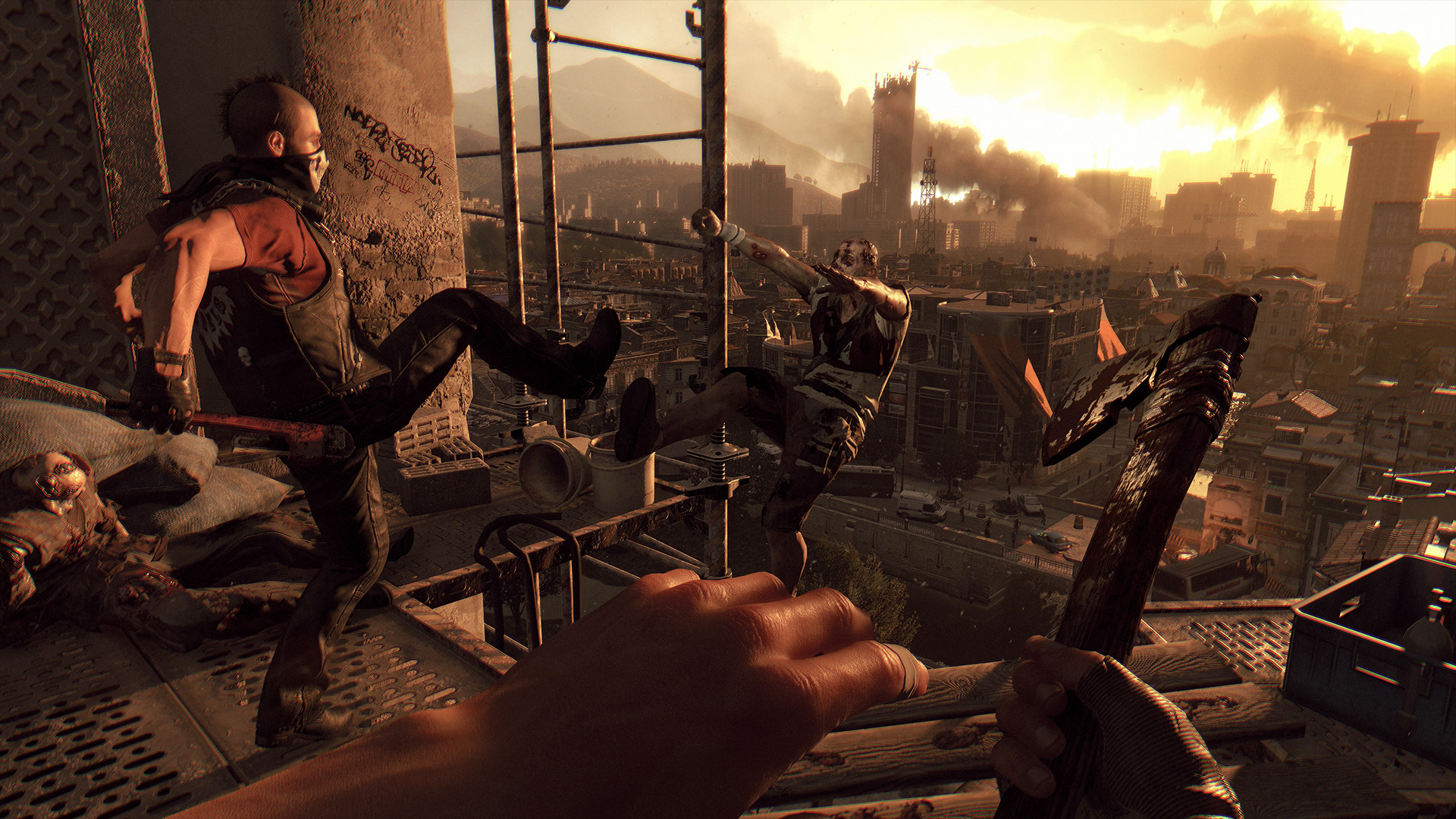
Dying Light combines first-person parkour traversal with zombie survival in an open world that transforms dramatically when the sun goes down. The game's defining feature is its day-night cycle. Daytime is for scavenging and questing while outrunning standard zombies, while nighttime unleashes Volatiles, terrifying fast zombies that hunt by sound and chase relentlessly. Parkour traversal over rooftops makes movement feel exhilarating rather than tedious. Techland's continued support added The Following DLC (a massive countryside expansion with driveable buggies), numerous content updates, and one of the longest post-launch support periods in gaming. The game remains the benchmark for first-person melee zombie combat.
If you're just starting, check our beginner's guide first.
Essential Tips
1. Night time gives 2x Agility and Power XP
Running from Volatiles at night is the fastest way to level these trees. Pop a UV flare if caught, sprint, and get to a safe house.
2. The dropkick (Power tree) is the single best combat move in the game
It one-shots most standard zombies, knocks Virals off buildings, and creates distance against groups. Use it constantly.
3. The grappling hook at Survivor rank 12 transforms the game
It trivializes rooftop traversal and provides emergency escape from any ground-level situation. Prioritize reaching rank 12.
4. UV flashlight stuns Volatiles for approximately 3 seconds
Flash them, sprint past, and keep running. Don't try to fight Volatiles until you have Legend Level investments in weapon damage.
5. Craft flammable, toxic, and electric weapon modifications as soon as you find blueprints
Elemental weapons deal dramatically more damage than unmodified weapons of the same tier.
6. Police vans and supply drops (via flares or random events) contain the best weapons
Blue supply drops falling from the sky are contested by bandits. Kill them for gold-tier weapons.
7. Camouflage skill (Survivor tree) lets you cover yourself in zombie guts and walk undetected among Biters
Essential for certain quests and a panic button when overwhelmed.
8. Co-op scales zombie count, not individual zombie difficulty
Four players make the game easier, not harder. Play co-op for the most fun experience.
9. Weapons have limited repairs
Don't waste repairs on white or green weapons. Save repair resources for blue and purple weapons you've modified with elemental blueprints.
10. The Following DLC's buggy UV headlights are the best Volatile counter in the game
Driving through fields at night with UV lights blazing is the safest nighttime travel method.
Advanced Strategies
Role Optimization
The difference between an average build and an optimized one is massive. See our builds guide for full breakdowns.
-
The utility/crafting skill tree that improves inventory management, crafting efficiency, and lockpicking. Higher Survivor rank unlocks better blueprints and merchant access. Leveled through quest completion and supply drops.
-
Core gear: Crafted weapons, lockpicks, medkits
-
Stat priority: Crafting Blueprints, Merchant Access, Inventory Space
-
The parkour skill tree unlocking movement abilities: dodge, dropkick, vault-over, tic-tac, and the game-changing grappling hook. Leveled through parkour actions and nighttime traversal. The most impactful tree because mobility is survival.
-
Core gear: Grappling Hook, Camouflage skill, UV Flares
-
Stat priority: Grappling Hook unlock, Dodge, Vault-Over
Mechanic Interactions
Understanding how Dying Light's systems interact is where the real optimization lives. Our combat guide covers this in detail.
parkour traversal + day-night cycle: A full parkour system: mantling, wall running, sliding, climbing, zip lines, and leaping between buildings. Combined with day-night cycle, during the day, standard biters (slow zombies) and virals (fast runners) populate the world.
weapon crafting + co-op gameplay: Melee weapons degrade with use and can be repaired a limited number of times. When paired with co-op gameplay, up to 4 players share the same world with scaled zombie density.
volatile encounters scaling: Volatiles are the endgame enemies with high speed, massive damage, and the ability to call hordes. Engaging them directly is suicidal early game. Running and using UV light for brief stuns is the survival strategy. Late-game Legend Level builds can fight Volatiles but it remains dangerous.
Weapons Efficiency
| Weapon | Best Use Case | Why |
|---|---|---|
| EXPCalibur | Fun/novelty use | An Easter egg weapon found by locating a specific rock on an island. |
| Korek Machete | Early-mid game all builds | A craftable weapon using the Korek blueprint found on a rooftop near the Tower. |
| Last Hope | Power Tree, Legend Level builds | The highest base damage melee weapon in the base game, a gold-tier machete dropped by demolishers and in police vans. |
| Rune Hammer | Power Tree | A legendary blueprint hammer that deals massive impact damage with built-in electrical effect. |
| Gonunaba | Agility/Power hybrid builds | A unique katana found in The Following DLC inside a cave with a specific quest. |
Location Efficiency
Old Town (Survivor Rank 12+): The second major area with taller buildings better suited for parkour. The architecture enables longer grappling hook swings and more vertical exploration. Higher-level enemies and better loot than the Slums. Home to the University quest hub.
The Slums (Survivor Rank 1-12): The starting area with lower buildings and denser zombie population. The Tower serves as the main hub with merchants, stash, and quest givers. The Slums teach core mechanics in a relatively forgiving environment.
Antenna (Mid-story): A major story landmark and the highest point in the Slums. Climbing it is a scripted story moment that teaches vertical parkour. The surrounding area has good loot spawns and supply drops.
The Countryside (Survivor Rank 12+ (DLC)): The Following DLC's massive open area designed for buggy traversal. Farmlands, military checkpoints, and cult locations spread across a map larger than both base game areas combined. Volatiles are particularly dangerous in the flat, open terrain.
Harran Stadium (High level (DLC)): The Bozak Horde DLC arena with wave-based combat challenges. Completing trials unlocks the Bozak Bow (the only repeating crossbow) and other unique weapons. The horde challenges are the most intense combat in the game.
Mistakes Even Veterans Make
- Fighting zombies on the ground instead of using rooftops. Parkour is your primary survival tool. Staying on rooftops avoids 90% of all danger.
- Avoiding nighttime entirely. The 2x XP bonus at night accelerates progression dramatically. Learn to run from Volatiles and night becomes a net positive.
- Repairing and modifying low-quality weapons. Save your blueprints and repair resources for blue-tier and above weapons. White and green weapons are disposable.
- Ignoring the grappling hook's utility. Once unlocked, the grappling hook should be used constantly for traversal, escape, and repositioning during combat.
- Not carrying UV flares at night. UV flares create a safe zone for 30 seconds that Volatiles won't enter. They cost almost nothing to craft and save your life regularly.
Pro Quick Tips
- Night time gives 2x Agility and Power XP. Running from Volatiles at night is the fastest way to level these trees. Pop a UV flare if caught, sprint, and get to a safe house.
- The dropkick (Power tree) is the single best combat move in the game. It one-shots most standard zombies, knocks Virals off buildings, and creates distance against groups. Use it constantly.
- The grappling hook at Survivor rank 12 transforms the game. It trivializes rooftop traversal and provides emergency escape from any ground-level situation. Prioritize reaching rank 12.
- Start with Agility Tree, switch to Survivor Tree when ready
- Invest in EXPCalibur above everything else
- Clear areas in order: Old Town → The Slums → Antenna → The Countryside → Harran Stadium. See our maps guide
- parkour traversal + day-night cycle together are stronger than either alone
Similar Games
If you enjoy Dying Light, check out these related guides:
- Helldivers 2 Tips & Tricks: action game with similar mechanics
- Black Myth: Wukong Tips & Tricks: action game with similar mechanics
- Monster Hunter Wilds Tips & Tricks: action game with similar mechanics