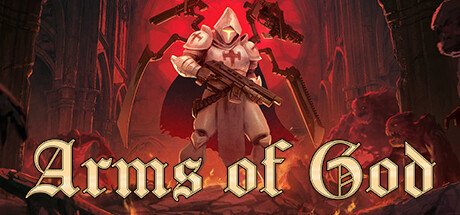
The Arms of God Demo provides a substantial taste of the full game, covering the first chapter (Temple Ruins) and the first boss encounter. It gives access to two weapon types (Divine Sword and Holy Staff) and lets you experience the core combat loop including combos, Divine Form, and skill upgrades. Demo progress carries over to the full game if purchased. The demo is an excellent way to evaluate whether the combat system's depth and the divine weapon mechanic appeal to your playstyle before committing to a purchase.
Combat in Arms of God Demo rewards knowledge over reflexes. Understanding how each mechanic works (and how they interact) is what turns a struggling player into a dominant one. New here? Start with our beginner's guide for the basics.
Core Combat Mechanics
1. hack-and-slash combat
The demo features the full combat system: light attacks, heavy attacks, launchers, dodge rolls, and aerial juggling. Combo ratings from D to SSS affect XP gain. Perfect dodges trigger slow-motion counter windows. All core combat mechanics are present and identical to the full game.
Why it matters: This is the foundation of all combat. Everything else builds on this.
2. divine weapon system
Two weapons are available in the demo: Divine Sword and Holy Staff. Each has its first skill tree tier unlockable, showing how the branching upgrade system works. Divine Form activates after building charge through combat, transforming your weapon temporarily.
Why it matters: The most underrated mechanic. Players who master this early have a massive advantage.
3. boss encounters
The demo concludes with the Temple Guardian boss. A multi-phase fight teaching phase transitions, telegraph recognition, and Divine Form timing. This boss serves as a skill check for the combat system before the full game's difficulty ramp.
Why it matters: Unlocks a new layer of gameplay depth once understood.
4. skill upgrades
The demo allows spending Divine Points on the first tier of skill upgrades for both available weapons. This demonstrates the upgrade system without the full branching complexity of the complete skill trees.
Why it matters: The tactical edge that separates average players from advanced ones.
5. demo content
Content is limited to the Temple Ruins zone with approximately 2-3 hours of gameplay including exploration, combat encounters, and the boss fight. All tutorials are present. Save data transfers to the full game.
Why it matters: The endgame optimization mechanic. Small improvements here compound into massive gains.
Mechanic Synergies
Understanding how mechanics interact is where real optimization happens:
hack-and-slash combat + divine weapon system
The demo features the full combat system: light attacks, heavy attacks, launchers, dodge rolls, and aerial juggling. When combined with divine weapon system, two weapons are available in the demo: divine sword and holy staff. This combination is the core of every effective build.
boss encounters + skill upgrades
The demo concludes with the Temple Guardian boss. Paired with skill upgrades, the demo allows spending divine points on the first tier of skill upgrades for both available weapons. This is why the tier list favors builds that leverage both.
demo content as a Multiplier
Content is limited to the Temple Ruins zone with approximately 2-3 hours of gameplay including exploration, combat encounters, and the boss fight. All tutorials are present. Save data transfers to the full game. This system amplifies everything else. The better your demo content optimization, the more your other mechanics pay off.
Combat by Role
Each role approaches combat differently:
Warrior (S-Tier)
Combat approach: Learn the five-hit light combo and heavy finisher. Practice perfect dodges against temple enemies. Use Divine Form on the boss. Key weapons: Divine Sword Primary mechanic: hack-and-slash combat
The Divine Sword is the recommended weapon for the demo as it teaches fundamental combat mechanics with a balanced moveset. Full setup in our builds guide.
Mage (A-Tier)
Combat approach: Mix staff melee combos with spell casts. Place spell circles on choke points. Experience the different rhythm compared to the sword. Key weapons: Holy Staff Primary mechanic: divine weapon system
The Holy Staff is obtained partway through the demo, offering a taste of the ranged-melee hybrid playstyle. Full setup in our builds guide.
Rogue (C-Tier)
Combat approach: Not available. Daggers unlock in the Dark Forest zone (full game only). Key weapons: Shadow Daggers Primary mechanic: boss encounters
Shadow Daggers are not available in the demo. Full setup in our builds guide.
Paladin (C-Tier)
Combat approach: Not available. Shield unlocks in the Volcanic Forge (full game only). Key weapons: Sacred Shield Primary mechanic: skill upgrades
The Sacred Shield is not available in the demo. Full setup in our builds guide.
Ranger (C-Tier)
Combat approach: Not available. Bow unlocks in the Celestial Tower (full game only). Key weapons: Celestial Bow Primary mechanic: demo content
The Celestial Bow is not available in the demo. Full setup in our builds guide.
Advanced Combat Techniques
Damage Optimization
- Match your weapons to your role's stat priorities
- Exploit hack-and-slash combat for maximum damage windows
- Chain divine weapon system and boss encounters for combo damage
- Use skill upgrades to create openings
Survivability
- Learn enemy patterns before committing to attacks
- The demo is designed to be replayed. Try beating the boss with both the Divine Sword and Holy Staff to compare weapon feel before buying the full game.
- Position using hack-and-slash combat to control spacing
- Save defensive options for guaranteed survival, not comfort
Boss Combat
Bosses test your understanding of every mechanic. See our boss guide for fight-specific strategies.
- Phase awareness: Most bosses change behavior at health thresholds
- Patience over aggression: One extra hit per opening beats dying to greed
- Build preparation: Swap gear and weapons for specific fights when needed
Common Combat Mistakes
- Button mashing: Committed attacks have recovery frames. Mashing locks you into animations.
- Ignoring divine weapon system: This mechanic exists for a reason. Players who use it take significantly less damage.
- Wrong weapons for the situation: Check our weapons guide for situational picks.
- Not learning from deaths: Every death teaches something. If you don't know why you died, you'll die the same way again.
- Overcommitting: Trading hits works in Temple Ruins but will get you killed in Tutorial Zone.
More Arms of God Demo Guides
- Arms of God Demo Arms of God Demo Overview
- Arms of God Demo Best Builds
- Arms of God Demo Tier List
- Arms of God Demo Walkthrough
- Arms of God Demo Beginner's Guide
- Arms of God Demo Tips & Tricks
- Arms of God Demo Weapons Guide
- Arms of God Demo Boss Guide
- Arms of God Demo Maps & Locations
- Arms of God Demo Crafting Guide
- Arms of God Demo Classes & Characters
Similar Games
If you enjoy Arms of God Demo, check out these related guides:
- Helldivers 2 Combat Guide: action game with similar mechanics
- Black Myth: Wukong Combat Guide: action game with similar mechanics
- Monster Hunter Wilds Combat Guide: action game with similar mechanics