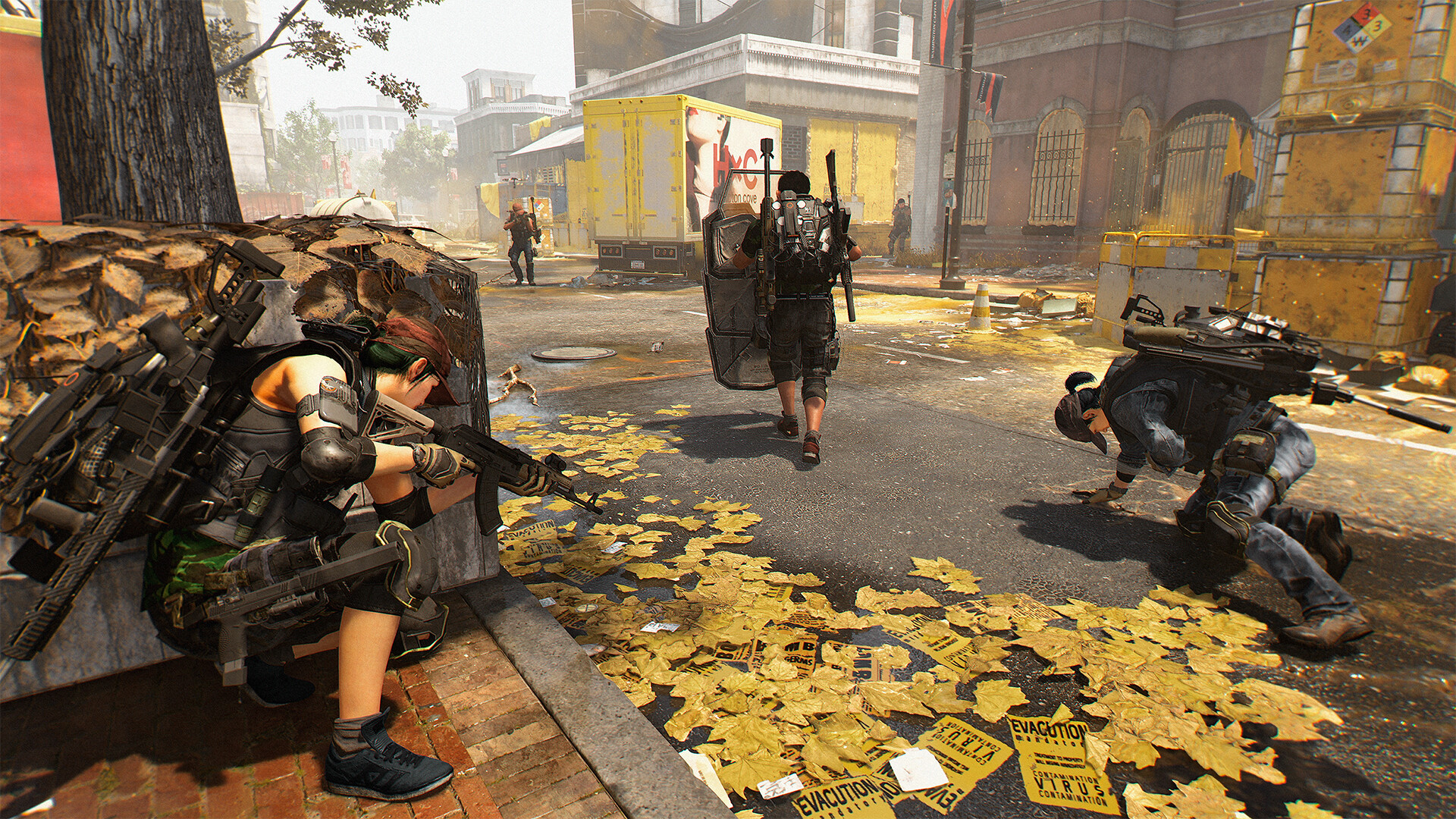
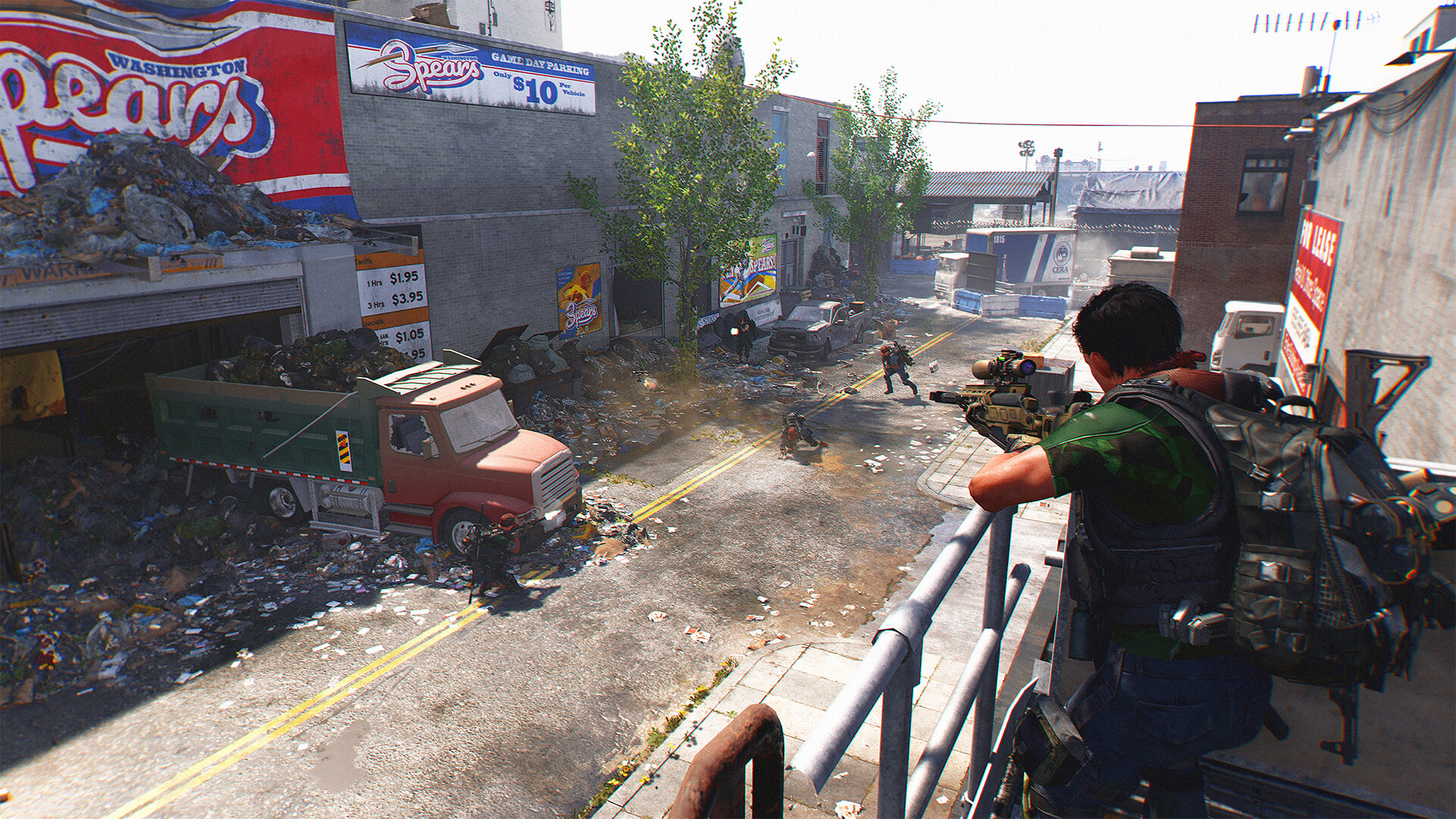
The Division 2 drops you into a collapsed Washington DC as an agent rebuilding order one firefight at a time. Underneath the cover-shooter combat sits a deep looter-RPG where gear attributes, talents, and skill tiers define your power. The campaign is just the warm-up before endgame builds and the brutal Summit tower.
Combat in Tom Clancy's The Division 2 rewards knowledge over reflexes. New here? Start with our beginner's guide for the basics.
Core Combat Mechanics
1. gear cores and attributes
Every gear piece rolls a major core attribute colored red for weapon damage, blue for armor, or yellow for skill tier, plus secondary attributes. Stacking the right cores is the foundation of any build, so a damage build wants red cores almost everywhere.
2. skill builds
Skills like the Striker drone and Sticky Bomb scale with your skill tier, which climbs as you stack yellow attributes up to tier six. A maxed skill build deletes enemies without firing a shot, trading personal armor for explosive utility.
3. brand sets and gear sets
Wearing multiple pieces of the same brand grants escalating bonuses, and dedicated gear sets like Striker's offer powerful set effects. Mixing brands for partial bonuses or committing to a set is a core build decision.
4. Dark Zones
Three walled Dark Zones hold high-value contaminated loot you must extract under threat of other players going rogue. The tension of PvPvE extraction makes the Dark Zone the riskiest, most rewarding open-world content.
5. SHD watch leveling
After the campaign, the SHD Watch levels infinitely, granting small permanent stat points you allocate across offense, defense, and utility. It is a slow but steady account-wide power creep for dedicated players.
How These Mechanics Combine
Understanding how mechanics interact is where real optimization happens:
gear cores and attributes + skill builds
Every gear piece rolls a major core attribute colored red for weapon damage, blue for armor, or yellow for skill tier, plus secondary attributes. When combined with skill builds, skills like the striker drone and sticky bomb scale with your skill tier, which climbs as you stack yellow attributes up to tier six. This combination is the core of every effective build.
brand sets and gear sets + Dark Zones
Wearing multiple pieces of the same brand grants escalating bonuses, and dedicated gear sets like Striker's offer powerful set effects. Paired with Dark Zones, three walled dark zones hold high-value contaminated loot you must extract under threat of other players going rogue. This is why the tier list favors builds that leverage both.
SHD watch leveling as a Multiplier
After the campaign, the SHD Watch levels infinitely, granting small permanent stat points you allocate across offense, defense, and utility. It is a slow but steady account-wide power creep for dedicated players. The better your SHD watch leveling optimization, the more your other mechanics pay off.
Combat by Role
Each role approaches combat differently:
Crit DPS (S-Tier)
Combat approach: Peek, crit, reposition, repeat Key weapons: Chatterbox Primary mechanic: gear cores and attributes
Stack critical hit chance and damage with red cores and a strong AR or rifle. Full setup in our builds guide.
Skill Build (S-Tier)
Combat approach: Deploy skills, kite, let the drone work Key weapons: Eagle Bearer Primary mechanic: skill builds
Six skill tiers turn your turret and drone into the main weapon. Full setup in our builds guide.
Tank Healer (A-Tier)
Combat approach: Hold the shield, soak fire, repair the team Key weapons: Bighorn Primary mechanic: brand sets and gear sets
Blue cores and the Foundry Bulwark set make you a near-unkillable shield carrier who repairs allies. Full setup in our builds guide.
Hybrid Survivalist (B-Tier)
Combat approach: Trade safety for damage as your gear improves Key weapons: Lullaby Primary mechanic: Dark Zones
A balanced mix of damage and survivability for newer players still gathering god-roll gear. Full setup in our builds guide.
Status Effect Build (A-Tier)
Combat approach: Apply ailments, control the field, finish Key weapons: Sweet Dreams Primary mechanic: SHD watch leveling
Burn, bleed, and shock enemies with status damage and the right talents, strong against tough armored targets. Full setup in our builds guide.
Advanced Combat Techniques
Damage Optimization
- Match your weapons to your role's stat priorities
- Exploit gear cores and attributes for maximum damage windows
- Chain skill builds and brand sets and gear sets for combo damage
- Use Dark Zones to create openings
Survivability
- Learn enemy patterns before committing to attacks
- Pick a build direction early and match all your gear cores to it, red for damage or yellow for skills.
- Position using gear cores and attributes to control spacing
- Save defensive options for guaranteed survival, not comfort
Boss Combat
Bosses test your understanding of every mechanic. See our boss guide for fight-specific strategies.
- Phase awareness: Most bosses change behavior at health thresholds
- Patience over aggression: One extra hit per opening beats dying to greed
- Build preparation: Swap gear and weapons for specific fights when needed
Common Combat Mistakes
- Button mashing: Committed attacks have recovery frames.
- Ignoring skill builds: This mechanic exists for a reason.
- Wrong weapons for the situation: Check our weapons guide for situational picks.
- Not learning from deaths: Every death teaches something.
- Overcommitting: Trading hits works in The White House but will get you killed in The Summit.
Similar Games
If you enjoy Tom Clancy's The Division 2, check out these related guides:
- Counter-Strike 2 Combat Guide: fps game with similar mechanics
- Apex Legends Combat Guide: fps game with similar mechanics
- Rainbow Six Siege Combat Guide: fps game with similar mechanics